
Dental Month- Equine Edition!
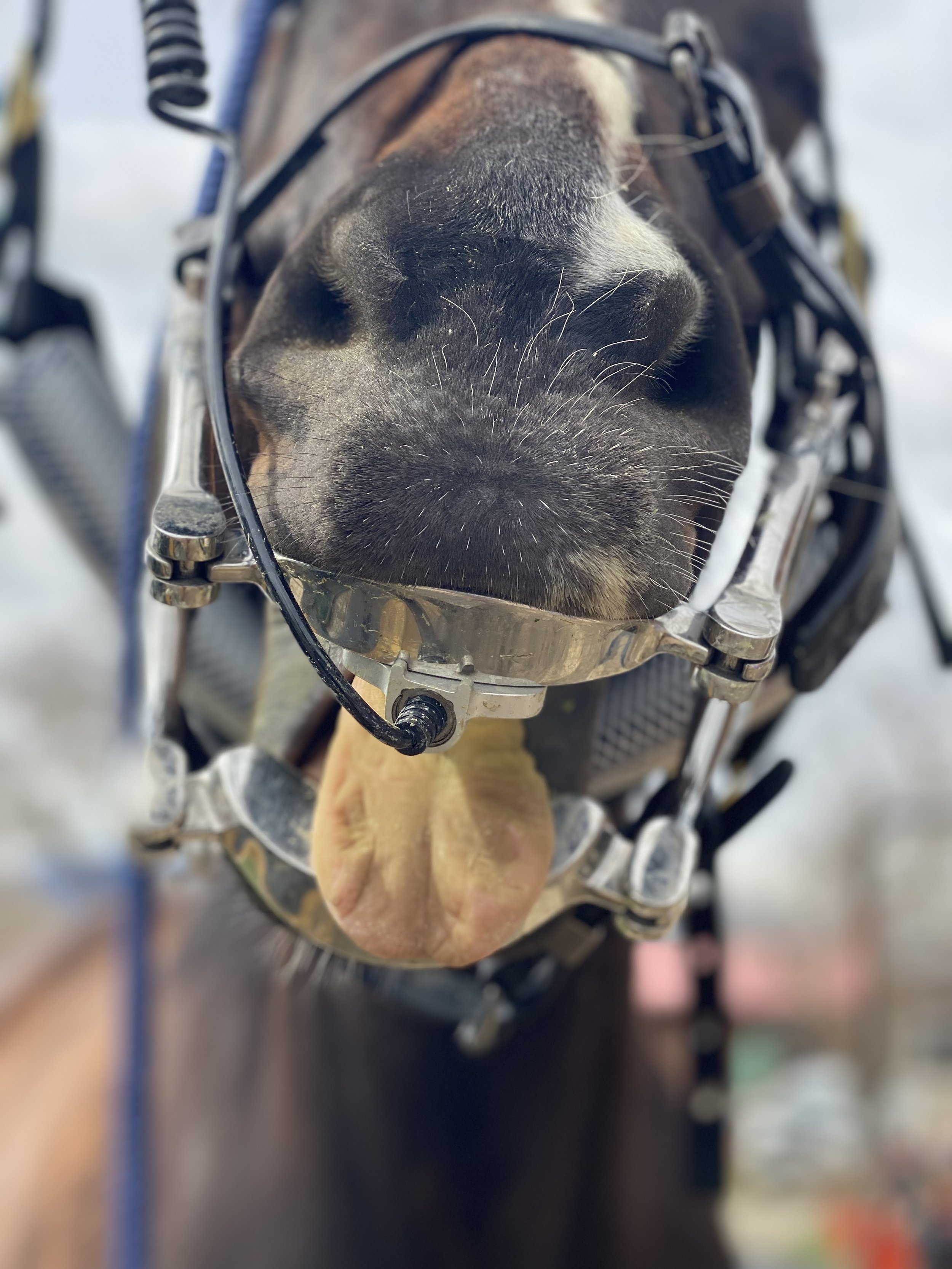
Dental Care for Performance & Comfort
Dental care isn’t just for dogs and cats—horses need healthy teeth too! Proper dental health is essential for your horse’s comfort, nutrition, and overall wellbeing.
Why Horse Teeth Matter
Horses have teeth that continuously grow throughout their lives. Without regular care, uneven wear can lead to:
Sharp points or hooks that can cut the cheeks or tongue
Difficulty chewing and poor digestion
Weight loss or selective eating
Painful oral conditions that may go unnoticed
Even subtle changes in eating habits, head tossing, or resistance to the bit can signal dental discomfort.
What We Look for During an Equine Dental Exam
During a routine dental exam, your veterinarian will check for:
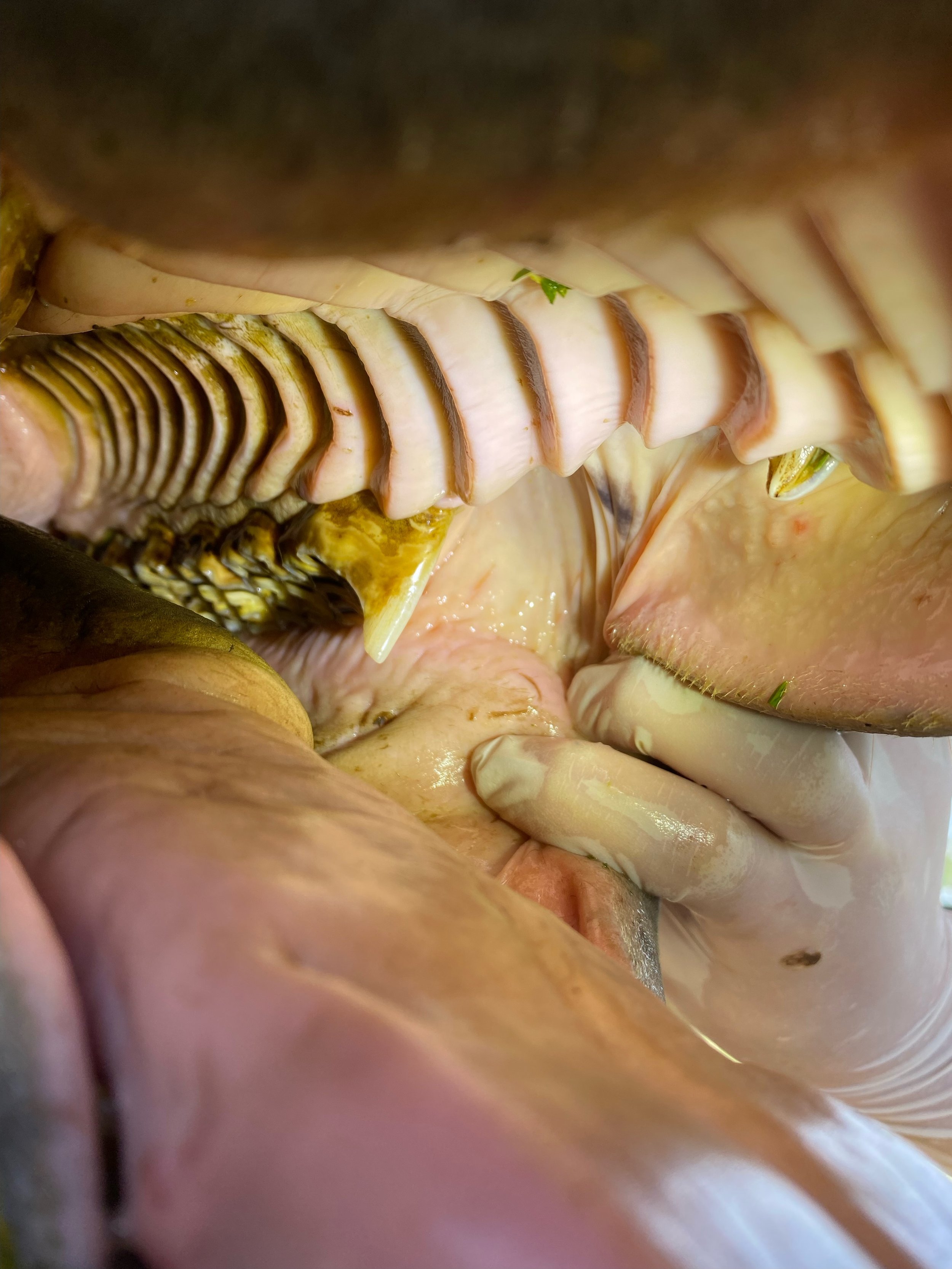
Sharp enamel points or hooks – can cause cuts and pain
Malocclusions – uneven tooth wear that affects chewing
A rostral hook can be seen in this photo.
Wolf teeth – small premolars that can interfere with the bit
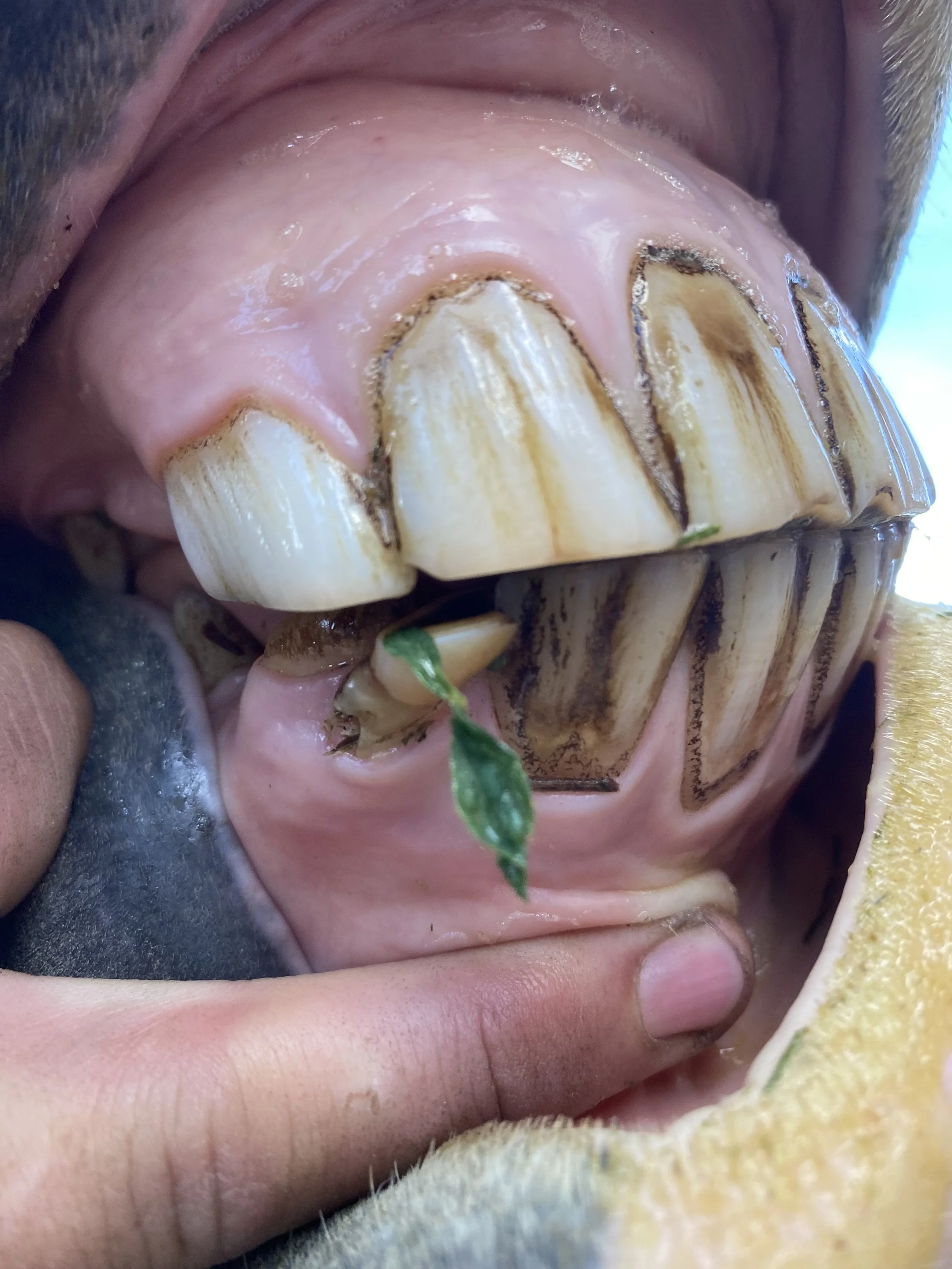
Retained caps – leftover baby teeth that can cause crowding.
Signs of infection or decay – including abscesses or fractures
A retained incisor can be seen in this photo.
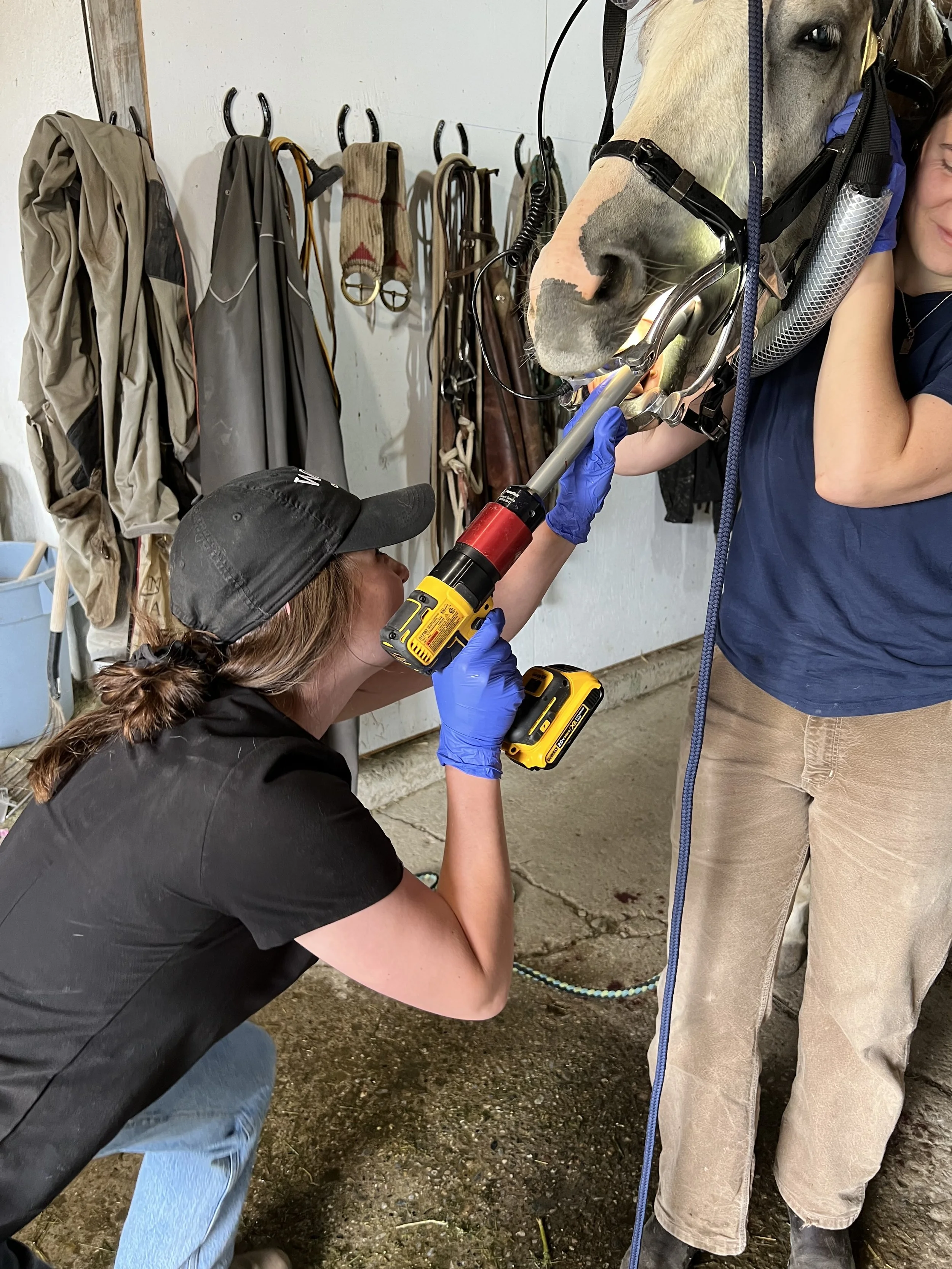
Using sedation & specialized tools, veterinarians can safely file teeth (called floating) to correct uneven surfaces and prevent further issues.
How Often Should You Check Your Horse’s Teeth?
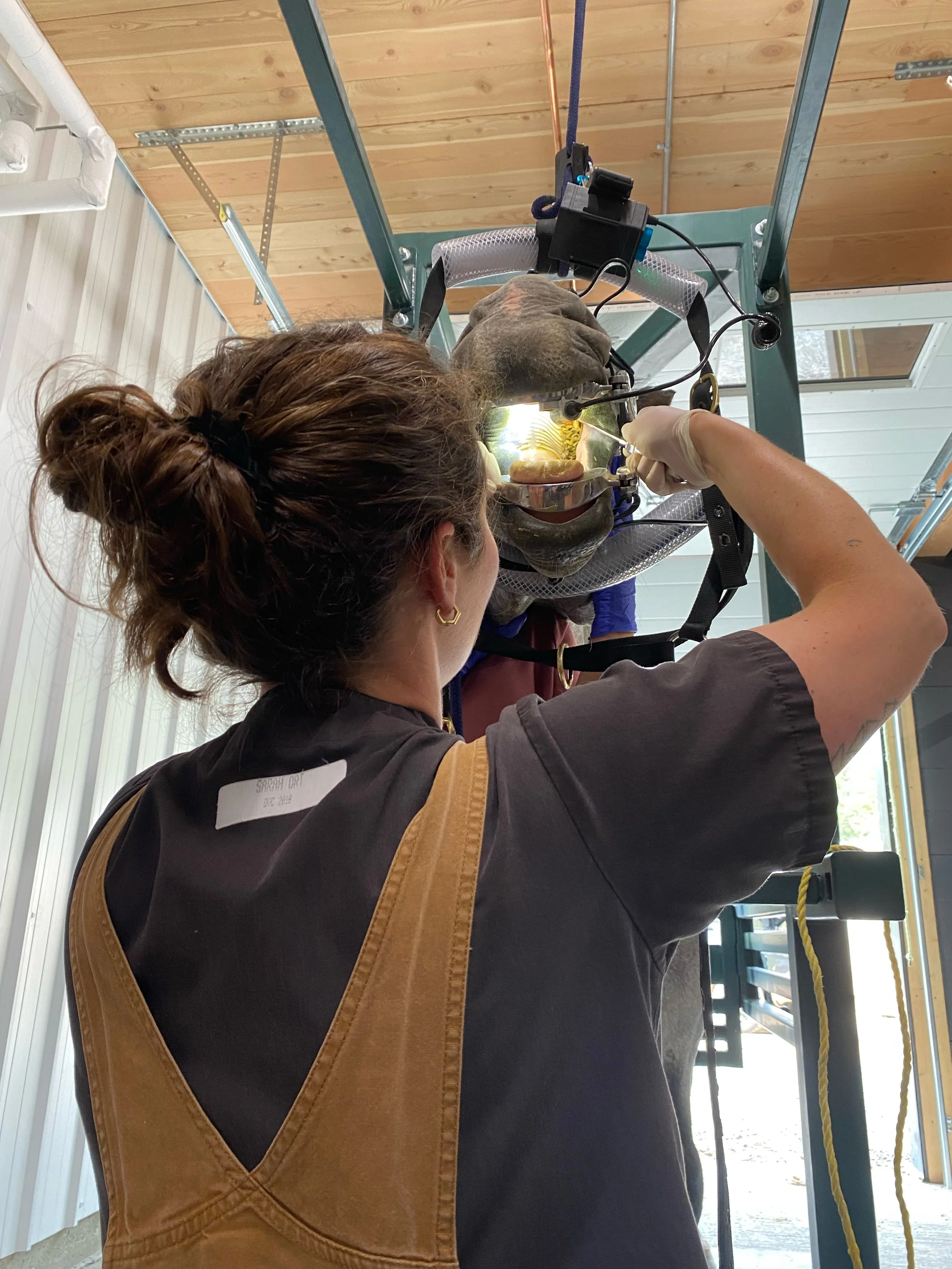
Most horses benefit from a sedated dental exam at least once a year, though young horses, older horses, or those showing signs of discomfort may need checks every 6–12 months.
At-Home Tips for Supporting Dental Health
While professional exams are essential, you can support your horse’s dental care at home by:
Monitoring eating habits and behavior
Checking for weight loss or dropping feed
Inspecting the mouth occasionally if your horse allows
Encouraging natural grazing through appropriate forage choices
Healthy Teeth = Happy Horse
Regular dental care keeps your horse comfortable and performing at their best. Don’t wait for signs of pain—early detection and prevention make all the difference.
📞 Contact us today to schedule your horse’s dental checkup!
